1. Prices & Sales Activity Still Under Pressure
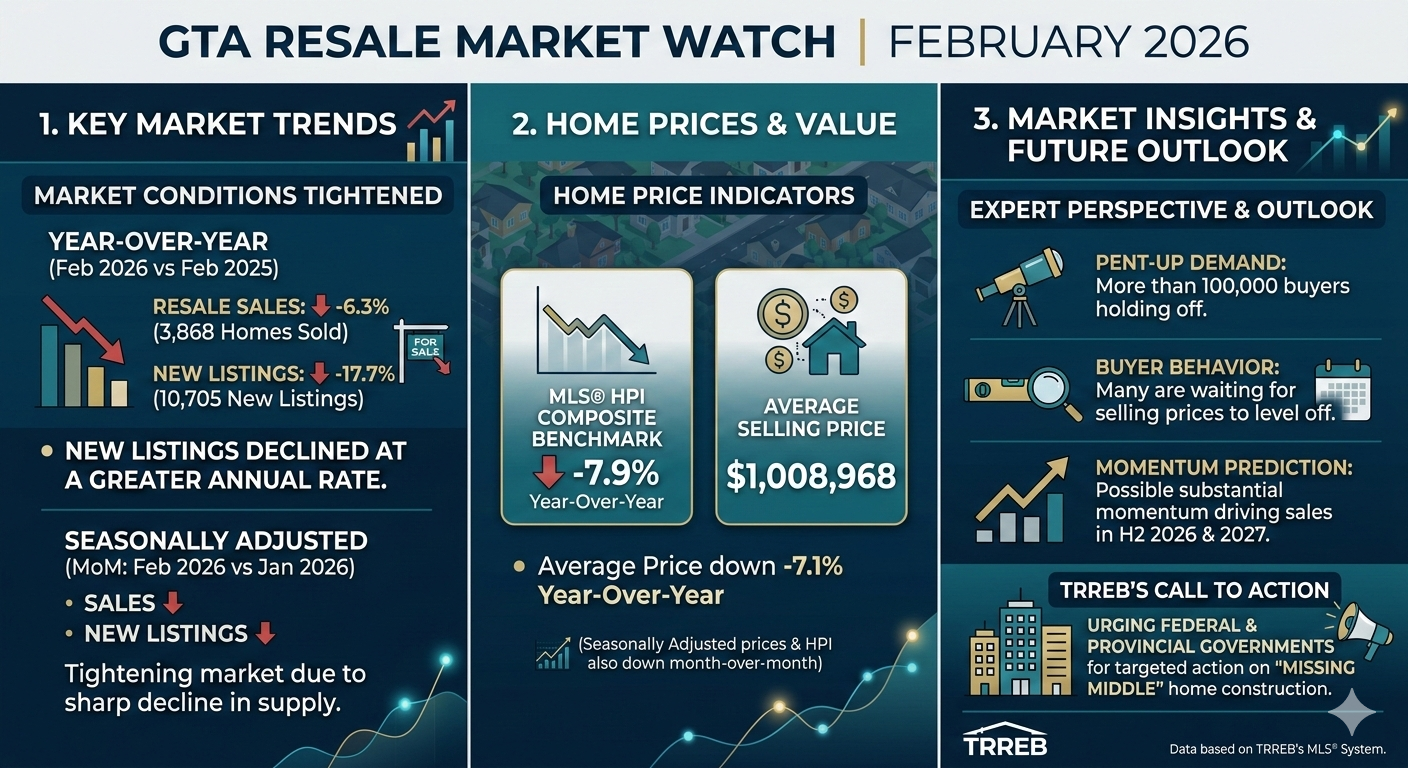
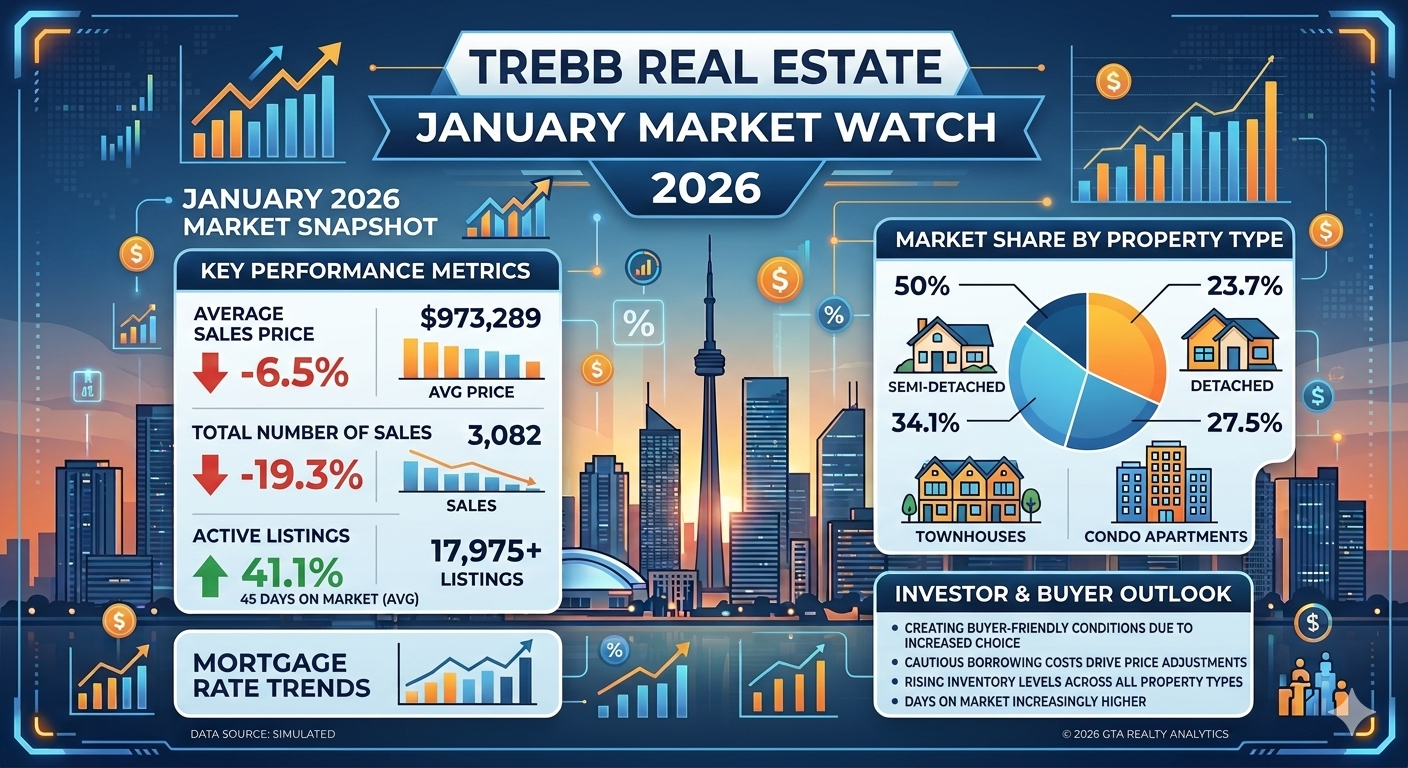
Average home prices in Toronto are down year-over-year, with many segments softening significantly compared to previous years. According to recent market reports, average sold prices have declined from 2025 levels and continue to trend lower in early 2026.
- Overall average prices have eased, influenced partly by shifts in the types of homes selling and a growing inventory.
- Detached and multi-bedroom homes have seen moderate declines, while some larger and luxury segments are down even more.
Sales volumes remain below historic norms, suggesting continued caution among buyers.
📊 What this means: Buyers are finding more negotiating power and options, while sellers may need to be more flexible on price.
📦 2. Inventory & Market Balance Shifting
The market has been moving toward more balanced or buyer-favoured conditions:
- Listings have increased, meaning more choice for buyers than in previous tight markets.
- Elevated inventory also tends to slow price growth and extend marketing times.
📉 Mortgage rate shifts and winter weather also contributed to slower activity, keeping supply high relative to buyer demand.
🏢 3. Condo Market Still Challenged
The condo segment — once a top performer — is experiencing continued softness:
- Pre-construction condo sales have dropped sharply, with significantly fewer new units changing hands compared to past years.
- This points to weaker investor demand and a cooling of speculative buying.
Rentals and lease-ups have softened, with some areas reporting longer times on market and downward pressure on rents.
🧭 4. Outlook: Mixed but Stabilizing
Industry forecasts for 2026 are cautious:
- Some organizations expect the market to remain subdued, with modest recovery potential as interest rates and affordability trends evolve.
- Others caution that Toronto may still face downward pressure on prices and slower demand before broader improvement arrives.
Affordability remains a key issue, even as conditions ease slightly.
📍 What This Means for Buyers & Sellers
Buyers
✔ More inventory = less competition
✔ Better negotiating leverage vs previous tight markets
✔ Opportunity to revisit price expectations
Sellers
⚠ May need pricing strategy adjustments
⚠ Longer time on market is possible
⚠ Smart staging and marketing are crucial
Investors
📉 Condo performance may limit near-term strong returns
📊 Consider areas with rental demand or redevelopment potential
📌 Summary: A Market in Transition
The Greater Toronto real estate market in early 2026 shows signs of cooling, higher inventory, and slower sales, with price pressures continuing across many property types. While recovery isn’t out of the question, conditions remain more balanced or buyer-friendly than in recent peaks, with affordability and economic factors shaping buyer behaviour.
View The Full Report Here